Biblioteca Literaria

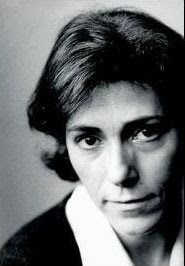
Maria do Rosário Pedreira

All posts tagged with this author

Foundation D. Inês de Castro Prize 2020 Awarded to Maria do Rosário Pedreira

Maria do Rosário Pedreira

The recognition includes a trophy created by sculptor João Cutileiro, an eight-day residency at Quinta das Lágrimas in Coimbra where Inês de Castro once lived, plus symbolic monetary compensation. According to public reports, the prize went to the book Collected Poetry, recently published by Quetzal. The jury panel consisted of José Carlos Seabra (chair), Mário Cláudio, Fernando Guimarães, Frederico Lourenço, and Pedro Mexia. They also honored Almeida Faria with a Lifetime Achievement Tribute.

The Right Music

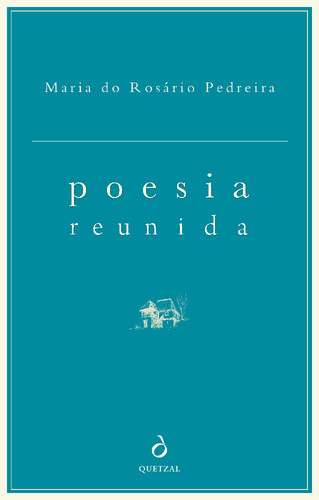
Book cover

Title: Poesia Reunida (Collected Poetry)

Author: Maria do Rosário Pedreira

Publisher: Quetzal

Pages: 256

ISBN: 978-989-722-047-0

Year: 2020

Maria do Rosário Pedreira's first three poetry collections—A Casa e o Cheiro dos Livros (1996), O Canto do Vento nos Ciprestes (2001), and Nenhum Nome Depois (2004)—had been out of print for years. This Quetzal volume reunites them all, marking a fifteen-year homecoming. It offers longtime readers a welcome reunion and new readers an important discovery.

With no revisions, cuts, or additions, these early books demonstrate the consistency of Pedreira's themes and the coherence of her poetic voice. Subtle shifts aside, the poems bear witness to love lived at its extreme limit, most often experienced as loss. Pedro Mexia's preface notes that "this poetry fears neither the tragic nor the ridiculous, which is the tragic seen from outside." It surrenders completely to a risky "ultra-romanticism" yet never succumbs to mere sentimental overflow (though at times escaping only by a hair's breadth). The secret lies in the restrained emphasis of this voice that marvels and disappoints, again and again, at the improbability of two lives, two timelines joining only to fork apart again, leaving wounds of absence, solitude, and waiting.

What emerges is an emotional landscape loaded with signals—objects, scents, memories we leave in houses and bodies. A language capable of capturing and decoding the subtlest vibrations that lovers awaken in each other:

Nothing between us bears the name of haste.
We know each other slowly, carefully
tracing its own labyrinths. On the skin
it's always the first time gestures happen. Yet,

if a door opens to summer, we see the same things—
what lies beyond the plain and cliff; the island,
a flock, a boat waiting to depart, a word
we'll never write. Between us

time draws itself slowly.
We'd always notice the smallest mistake.

To the known books, Pedreira adds a collection of previously unpublished poems (A Ideia do Fim), where instead of lack we find a kind of fullness. Love remains a violence, but a tranquil violence. The "disorder" of time when she "moved from wound to scar" is behind her. The ambition can be summed up as "growing old together on the house steps," and it's the very "idea of the end" that brings "the right music for my verses."

Rating: 8/10

Review published in Ler magazine, issue 117

Four Poems by Maria do Rosário Pedreira

She remembered him and, for love's sake, even if thinking
of serpent, she'd say only arabesque; and would hide
in her skirt the warm bite, the wound, the mark
of all deceptions, would do almost anything

for love: would give sleep and blood, house and joy,
and keep silent the ghosts of fear, which are
the owners of the greatest truths. She'd lied before

and for love would sit at his table
and deny she loved him, because loving him was a mistake
even greater than lying to him. And, for love, she'd set about

drawing time as a foolish line, always
falling off the page, prolonging the mismatch.
And made stars, though thinking of crosses;
arabesques, though remembering only serpents.


Read, these are the names of things you
left—me, books, your perfume
scattered around the room; dreams half-
finished and doubled pain, kisses across
my whole body like deep cuts that
will never heal; and books, longing,
the key to a house that was never
ours, a blue flannel robe I've
worn while making this list:

books, laughter I can't put away,
and rage—a vase of orchids you
loved so much without me knowing why and
which perhaps for that reason I never watered again; and
books, the bed unmade for so many days,

a letter on your pillow and so much
heartache, so much loneliness; and in a drawer
two tickets for a love film you
didn't watch with me, and more books, and also
a faded shirt I sleep in
at night to be closer to you; and, every-

where, books, so many books, so many
words you never said to me before the
letter you wrote that morning, and me,

me who still believes you'll return, that
you return, even if only for your books.


I see a star shining that,
apparently, has already died—thus
my life: luminous and, yet,
haunted by darkness. Lucky are

those who know death only
through cold hands—my whole life I've mourned
for bodies still whole. Happiness

makes me, despite everything, unhappy—
it's always the idea of the end that brings
the right music for my verses.


Words are starting to grow old: they have
pains in their joints and creak, from time
to time, without reason; they demand oils
and resins, time and slower sugars.

But I'm too old myself for
workshops, so tired of books and papers,
dying to live other things—for love,

perhaps I'd peek again into the world's sleeves
and write a string of shells
on the wrist of sand. But how many of your
kisses would I lose? Forgive me those who

still wait for me. I don't know if I'll return.

From Poesia Reunida, Quetzal, 2020

Extraordinary Hours

Outstanding news: Maria do Rosário Pedreira, one of this country's finest and most attentive readers, launched a blog yesterday about "extraordinary hours"—meaning the hours we spend reading, whether on or off the clock. This page has everything needed to become a reference point in Portugal's increasingly vibrant literary blogosphere.

Welcome, Maria do Rosário.

Maria do Rosário Pedreira Moves to LeYa

Maria do Rosário Pedreira

The announcement just arrived and it's quite explicit:

"Following a job offer (read: irresistible) to continue the always fascinating discovery of Portuguese authors (and others), I'm announcing that I'll be leaving my position as Editor at QuidNovi on December 31st. It was a project I nurtured practically from the root and worked on with an exceptional team that I obviously regret leaving. But after a certain age, we regret most what we didn't do, and as such, I felt I couldn't turn down this challenge.
I also inform you that Ana Maria Pereirinha, whom almost everyone already knows, will now assume responsibility for all ongoing projects."

To Maria do Rosário Pedreira, who has done exceptional work as an editor (in the Anglo-Saxon sense of the term), whose fruits are visible in the quantity of new Portuguese fiction writers she discovered and developed (including three Saramago Prize winners: José Luís Peixoto, valter hugo mãe, and João Tordo), to this tireless reader I send a big embrace and the wish that her new projects, like the previous ones, be crowned with success.

As for QuidNovi, I believe it remains in excellent hands with Ana Maria Pereirinha.

PS – More information in this story from Público online.

Two Poems by Maria do Rosário Pedreira

Say nothing—your mouth once belonged to me
and now I'm jealous of words. Whatever
you say will be a kiss placed on the lips of
another woman, pain and more pain, greater betrayal
for one who believed your love was for
death. Don't speak—I'm also jealous

of your voice; hearing you is being alone once more.


I don't know why the world becomes restless
when we're alone. Perhaps it doesn't know
that we've exhausted our eyes in the rigor of mirrors
and that, therefore, we're incapable of tracing
a path except to avoid it. In truth,

when night falls, adventures wither between us—
your silence breathes long, sometimes
hovers over the dunes of my body conspiring,
like a loom of clouds spinning storms
or a salty wind promising shipwrecks;
but never converts the impulse into a story.

I don't know why the world frets so much
when we're alone. Perhaps it doesn't realize
that we're not the sea of any beach,
that we choose to spare the cliffs the scars
of waves; and all so we won't learn
the true name of wounds.

From Relâmpago magazine, issue 22, 2008

The Seven Principles of Maria do Rosário Pedreira

Commandments is an exaggeration. They're more like principles, coordinates, guidelines. She outlined them while answering the third question in an email interview conducted by BlogTailors:

3. What characteristics do you consider essential for an editor?
Having read extensively and continuing to love reading (I say this because after many bad reads, we risk losing the taste); possessing general cultural knowledge that allows you to evaluate manuscripts you receive or knowing the right people to help with that task; having instinct to recognize books that interest the public and those that, even being good, will never leave a bookstore shelf; being cordial in relations with authors (for whom sometimes enormous patience is required); always keeping the reading public in mind and not confusing your personal tastes with that public's tastes; understanding that a book must always be something that enriches, never something that stupefies and manipulates; having a sense of the value of money (especially when working for others) and not spending it superfluously.

The complete conversation can be read here.