Coming Up Soon
Event details forthcoming.

Event details forthcoming.
Major retail chains have always exploited their bargaining power to impose draconian terms on small publishers. The economic crisis only made things worse. A recent example comes from Companhia das Ilhas, a micro-publisher based in Lajes do Pico (Azores), concerning digital invoicing methods proposed by FNAC. Here's an excerpt from the email sent by Carlos Alberto Machado:
"Not sure if you're aware, but FNAC is trying to impose a digital ordering/invoicing system at the suppliers' expense, with SAPHETY.COM as the intermediary. The costs include: Service activation → 100€ (50% discount until October 31, 2014), annual subscription included, plus message packages ranging from 50€ to 299€ depending on volume.
We just sent this to FNAC's accounting department:
"We were informed of FNAC's intention to implement a digital ordering/invoicing procedure with saphety.com. We have no objection to this, as we already use digital invoicing. However, if FNAC wants this system, FNAC should bear the inherent costs, not the suppliers. Our contract with FNAC is between equal parties, and can only be modified if both parties agree, never by unilateral imposition. FNAC cannot legally impose any charges on its suppliers, just as suppliers cannot impose profit margins or payment terms on FNAC."
Of course, "cannot legally" is quite relative when you hold all the cards. We'll see if this "intention" actually materializes and what reactions it provokes from other publishers.
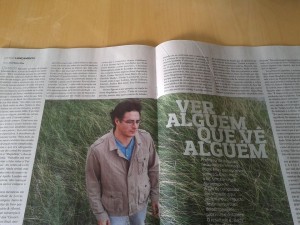
When Pedro Eiras talks about Johann Sebastian Bach's music, his face lights up. "It's miraculous because it provokes things in us that we can't explain. But unlike a miracle, which is unique and unrepeatable, it ravishes and crushes us the same way every time we hear it." At 39, this professor of Portuguese literature at the Faculty of Letters of the University of Porto, also an essayist, playwright and novelist, knows what he's talking about because Bach's music is literally part of his daily life.
"I've been listening to Bach every day for over twenty years. Every single day. It might be just a few minutes, it might be many hours, but it never fails. You'd have to be somewhere traveling, lost abroad, not to listen. And even then..."
Pedro Eiras shares these memories in Lisbon, in a Faculty of Letters café, where he came to participate in a symposium. Next to the coffee cups, a copy of the book he just released: Bach (Assírio & Alvim). This 150-page work represents the culmination of his immense fascination with the author of the Brandenburg Concertos.
NaNoWriMo is approaching. Who's in?
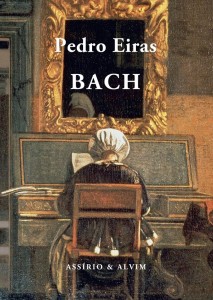
Bach
Author: Pedro Eiras
Publisher: Assírio & Alvim
Pages: 154
Year: 2014
In Dangerous Substances (Livrododia, 2010), "a small divertissement on literature in one hundred lessons," Pedro Eiras concluded a fascinating essayistic drift with this idea: "Literature owes nothing to what already exists: instead, it opens unsuspected doors. (...) Writing invents passages, narrow and uncertain. Nobody knows where they lead."
It is precisely these unsuspected doors and uncertain passages that establish the connection between the 14 chapters of this volume, substantiating Eiras's unorthodox approach to the figure and work of Johann Sebastian Bach.
Rating: 8/10
For a combination of reasons I won't specify (but let's just say the triad 'work, work, work' comes to mind), I've been forced to leave this site practically abandoned in recent months, which saddens me greatly. The lack of time hasn't even allowed for minimal updates (so important to me, as it makes this page my professional archive), so that all too often the once-thriving blog has resembled a desolate digital ruin.
Without making promises I might not be able to keep, my goal is to gradually emerge from this hibernation. First, share here, retrospectively, the many texts published in the meantime in Expresso (the archive). Then, gradually, return to an acceptable update rhythm. I'd really like to get back to normal by the end of the year. I'll try.
"(...) From the street, beyond the shutters, rises the sound of cars starting. Sometimes someone calls a name, a car honks. Soon the autumn rains will begin, and there will be the sound of water on the windows and sills, thunder, some hail, and the muffling that rain brings to the sounds of the city. There's the silence of the walls, of the darkness; my steps in the hallway. I walk with you from one side to the other, and I sing to you in a low voice: Mache dich, mein Herze, rein.
Always this aria from the St. Matthew Passion. The last aria, for bass, so solemn and intimate, with the strings so sweet wrapping around the voice. I don't know what the words mean. It would be enough to open the booklet that comes with the CD, read the text, the translations into English, into French, understand the aria's text. But I don't look for the booklet, I don't open it; I don't want to know the meaning of the words, just to sing it like this, in a low voice, pour the melody of this music over the silence that takes us, over your body falling asleep.
(...) I sing in a low voice: Mache dich, mein Herze, rein. Vibration of my voice, beating of your blood, agitation in my tired eardrums from the day. And from your sleep, which begins, rises an aura of warmth. Against my chest, I feel your slower pulsations: gestures, dreams of sounds and perfumes, knowledge of the body — without words. You move away into that interior world, which I don't know, or which I once knew and forgot.
For me, wakefulness. Narratives, theories. Walking in the dark, thinking about work and remembering so many things, texts I don't have time to write. I think I would like to write about Bach, but I don't know how to write about Bach, I'll still be searching for many years. I think about time. I think about the painful memory of images. I think about your fragility, and the world's siege; your breathing, and the violence that pushes bodies into the void. Your fragility in my hands and the world out there against us.
But I always murmur, I continue to murmur to you, always, Mache dich, mein Herze, rein..., as if these notes of music could protect us, these small sounds, a little warmth between our bodies. A brief melody, in the middle of the night, all we have, all that exists in us."
[from Bach, by Pedro Eiras, Assírio & Alvim, 2014]
Patrick Modiano
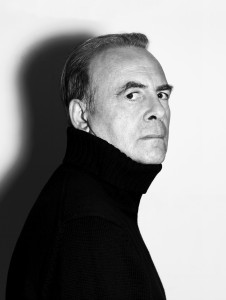
Excellent choice. I've written about two of his books: In the Café of Lost Youth (ASA, 2009) and The Horizon (Porto Editora, 2011).
Here's my bet for the 2014 Nobel Prize in Literature winner:
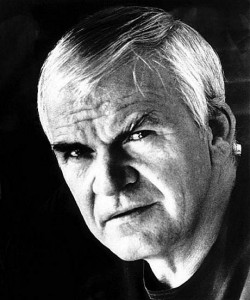
Milan Kundera