October 2013
Posts from this month in the archive
Tomorrow in the Actual Books Section
– Conversation with Claudio Magris regarding his book Alfabetos (Quetzal), by José Mário Silva
– Feature on Bruno Vieira Amaral discussing As Primeiras Coisas (Quetzal), by José Mário Silva
– A Tempestade da Guerra by Andrew Roberts (Texto), reviewed by Luís M. Faria
– Estrada para Los Angeles by John Fante (Alfaguara), reviewed by Ana Cristina Leonardo
– Supremo 16/70 by Miguel-Manso (Artefacto), reviewed by Pedro Mexia
– Da Madragoa a Meca by José Luís Costa (&Etc), reviewed by José Mário Silva
– Selections by Mário de Carvalho
Only Human Beings
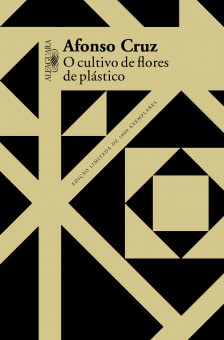
O cultivo de flores de plástico
Author: Afonso Cruz
Publisher: Alfaguara
Pages: 102
ISBN: 978-989-672-187-9
Year: 2013
In a stage direction from this, his first theatrical work, Afonso Cruz notes that a character has "outsized words in their mouth" and "breath of sea and vodka." These might seem like strange instructions for a director, but they immediately establish the atmosphere of this approach to the struggles (and unexpected joys) of street life—specifically four homeless individuals who've drunk the "invisibility potion" of poverty and transformed into "ghosts in a haunted city."
Across nine scenes of remarkable dramatic economy, Cruz offers sharp portraits of his characters: Couraçado Korzhev, a Russian who keeps maps in a bag, shells in his pocket, and nostalgia fueled by alcohol; Jorge, a man who one day tired of hypocrisy, told social order to take a hike, and lives according to that resignation (though he insists on spreading random acts of kindness); Lili, forever searching for locks that fit the keys left over from when she had a roof; and a "woman in a suit," willing to pretend she's pretending about the absolute poverty unemployment thrust her into.
Through precise, lyrical but never sentimental dialogue, these people lost from themselves and their memories find each other and create, from nothing, a strong bond and reason to keep going. In this society where "everything is plastic," even happiness, where "plastic itself gets replaced by plastic," there are still those whose hands smell of flowers, even if stolen from the cemetery. And who speak—there it is—with outsized words: "Nobody campaigns against abandonment for our sake. We are only human beings."
[Text published in Expresso newspaper's Actual supplement]
Tomorrow in the Actual Books Section
– Interview with J.M. Coetzee regarding the novel A Infância de Jesus (D. Quixote), by Clara Ferreira Alves
– Taxi Driver, photographs by Steve Schapiro, edited by Paul Duncan (Taschen), by Manuel S. Fonseca
– O Peregrino Encantado by Nikolai Leskov (Vega), by Pedro Mexia
– O cultivo de flores de plástico by Afonso Cruz (Alfaguara), by José Mário Silva
– Casa de Lava – Caderno by Pedro Costa (Pierre von Kleist Edições), by Alexandra Carita
– O preço da desigualdade by Joseph E. Stiglitz (Bertrand), by Luís M. Faria
– O enredo da bolsa e da vida by Eduardo Mendoza (Sextante), by José Guardado Moreira
– Páginas do Páginas Soltas by Bárbara Guimarães (Guerra & Paz), by António Loja Neves
– Selections by Jorge Palinhos
2013 LeYa Prize goes to Gabriela Ruivo Trindade
For the first time, the LeYa Prize—worth 100,000 euros—recognizes a woman: Gabriela Ruivo Trindade, 43, an emigrant in London currently unemployed. The winning book, Uma Outra Voz, the author's debut novel, will be published by LeYa in 2014 at a date to be announced. This year, a record 491 manuscripts were submitted from Germany, Angola, Brazil, Spain, USA, France, Guinea-Bissau, Italy, Luxembourg, Macau, Mozambique, Portugal, UK and Sweden. Through its president Manuel Alegre, the jury highlighted "the consistency of the narrative project that seeks, through multiple generations and focusing on characters of great strength—especially female ones—to portray the transformation of society and life models in a provincial city [Estremoz] in Alentejo." And further: "Notable is the originality with which the author combines the individual and collective, as well as the inclusion of the narrator(s)' perspective in the careful design of a universe with vast implications yet circumscribed to the sphere of the family world across a century of History. The fictional exploration of diary format and inclusion of photography also signal formal modernity in this work awarded by jury majority."
Tomorrow in the Actual Books Section
– Dossier on overvalued and undervalued authors in Portuguese literature, by Ana Cristina Leonardo, Clara Ferreira Alves, José Mário Silva, Luísa Mellid-Franco and Pedro Mexia
– A infância de Jesus by J. M. Coetzee (Dom Quixote), by José Mário Silva
– Tudo Passa by Vassili Grossman (Dom Quixote), by Luís M. Faria
– Cortes by Almeida Faria (Assírio & Alvim), by Pedro Mexia
– Selections by Samuel Pimenta
Wonders of Fatherhood
– So you talked on the radio, dad?
– Yes.
– About what?
– About the Nobel Prize in Literature.
– (Both, in a burst of enthusiasm) You won?
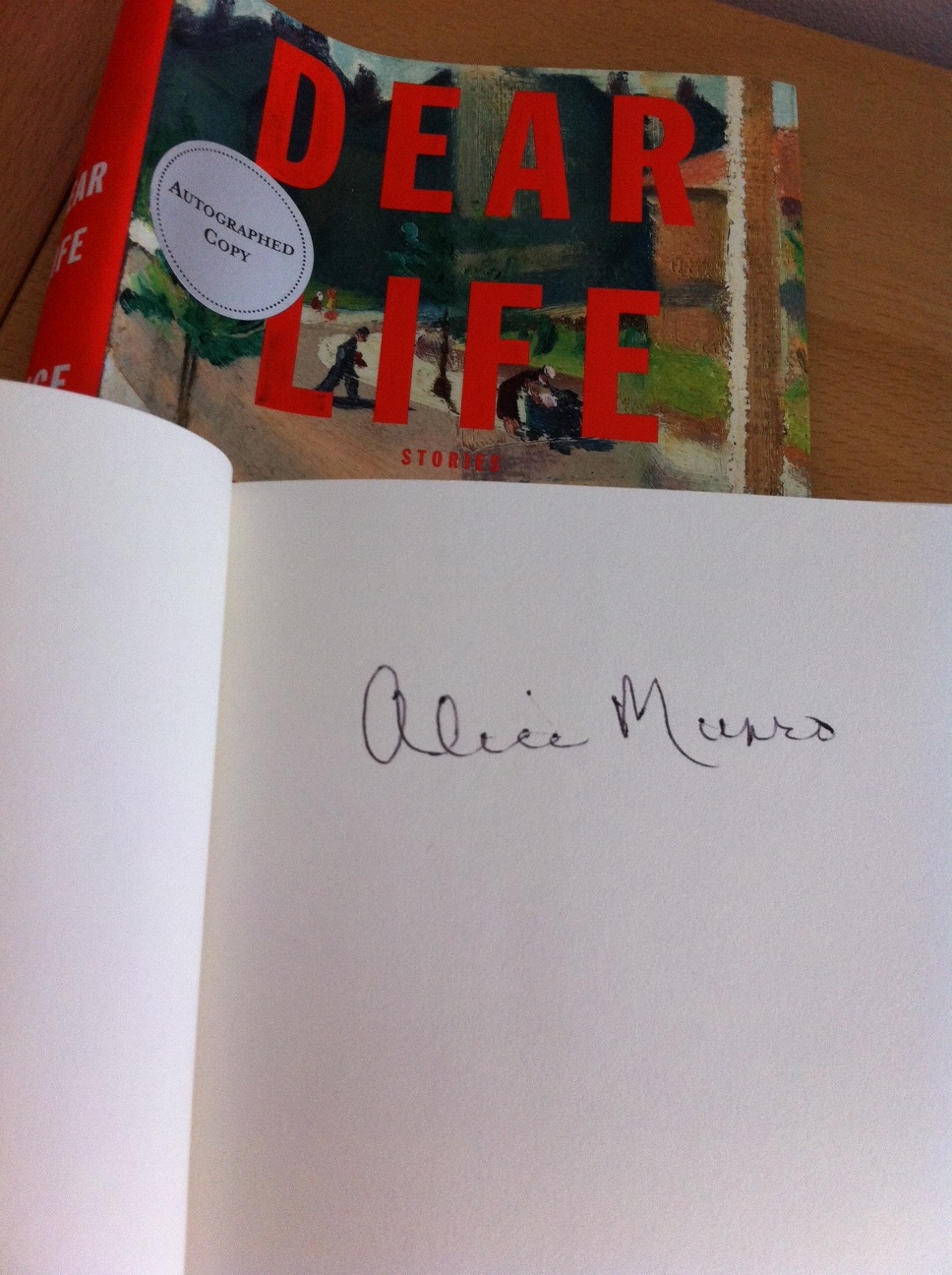
Her Signature
Click to enlarge
Master (and that says it all)
The Swedish Academy dropped its usual flowery (and sometimes bizarre) justifications, awarding the Nobel in Literature to Alice Munro for being "master of the contemporary short story." Just six words. And enough. Because that's what she is: contemporary master of the short story art. Like Chekhov, like Kafka, like Borges (writers greater than the Swedish Academy, alas, never awarded).
Second Telegram to Alice Munro
Turns out we didn't have to wait until 2025 STOP This time the Swedish Academy was quicker to grant my wish STOP Many congratulations on this most deserved Nobel STOP Never, ever stop writing STOP Regards from this Portuguese admirer
And the 2013 Nobel Prize in Literature winner is...

ALICE MUNRO (looks like I nailed it). And this time on the second attempt, not the fourth.
Ritual (2)
By now, the more or less gray-haired men and women (minus one) have realized it wasn't their turn this time and are sitting at a computer (or smartphone, or tablet) waiting to learn which way the Swedish Academy turned this year.
To follow the Nobel Literature announcement live:
8/1
According to Ladbrokes, my Nobel bet is well-rated: fifth place, at 8 to 1. Don't know if that's a good sign or bad sign. I know I won't win or lose a cent with the potential consecration of the author of Amada Vida. The literature game, for me, is something else.
And my bet for the 2013 Nobel in Literature is...
Same as last year:

Alice Munro, Canadian, 82 years old.
Ritual
Tomorrow, it happens again. Scattered around the world, more or less gray-haired men and women will look at the shelf where they keep their books (those published in their countries and the translations). Then they'll sit on the sofa or reading chair, with the phone beside them, waiting, wondering "will it be this time?"
Theater of Dust
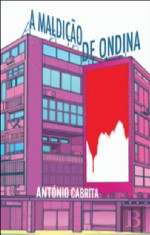
A Maldição de Ondina
Author: António Cabrita
Publisher: Abysmo
Pages: 233
ISBN: 978-989-98019-5-0
Year: 2013
Dolphins are mammals who don't experience deep sleep. To survive, one cerebral lobe must always stay alert, ensuring the essential surfacing every five minutes to breathe. This is the "Ondine's curse" referenced in the title of António Cabrita's magnificent debut novel. Also a metaphor for a country: Mozambique. "We can't sleep completely, and so we can't forget... we're in eternal vigil over our past (...) And without recovering the capacity to forget, we can't overcome resentment and achieve forgiveness."
Beyond the well-woven plot with vague detective contours, the novel speaks primarily of the author's experience, who traded Lisbon for Maputo nearly a decade ago. "Whoever lands in Africa suddenly notices a particular expansion of the instant. An intangibility makes time hover over the body, an hour branches into two, we're once again the child who glimpses paradise in the revolving door where one neither enters nor exits. Then this effect escapes us, time's cushion gets riddled with pins, and, as everywhere, anxiety shows its mane." Indeed, anxiety is a wild animal whose shadow generates the most diverse forms of violence and social injustice, encapsulated by Cabrita in small exemplary stories, marginal in the novel's context but revealing of a state of affairs: the maddening bureaucracy; dirty business; ballot boxes with opposition votes thrown into the sea ("democracy wasn't made for the African," says a sergeant); the case of a course to train librarians that accepts two illiterates as students; etc.
At the narrative's center is César, a Portuguese writer paralyzed by literary impasses (circling around his own writing, dissatisfied, to the point of deleting six months of work from his computer) and emotional ones (in full marital crisis with Beatriz, he reconnects with Argentina, a former girlfriend). He's a "perpetual adolescent," disoriented and volatile, trapped "in a hiatus, between success and disaster." As someone explains: "You're 'between'—in life, in love, in countries." Around César, everything fragments, everything dissolves, everything comes undone. With one foot in reality and another in fiction, he manages his own imbalance, summons figures from his cultural patrimony, advances in a "game of screens," falls flat more than once. In his chest, there's "a lunar crater"; and he feels himself on the stage of a "theater of dust."
César's counterpoint is Raul, the police friend whose stories he has been unconsciously vampirizing in the novels that brought him fame and (increasingly less) sustenance. Between the two creates the bond that sustains the main story, with tragic outcome. But what makes this book precious isn't the plot, nor even the narrative structure of many apparently loose ends, finally tied subtly. It's the language. Cabrita twists phrases, chisels syntax, rounds out prose, makes music. Example: "Convulsive grid, a city that unlearned gentleness, that unfolds in buckets and beds down in rubble." To exuberant writing joins tremendous rigor in scene construction, which always begin in a detail, a loose word, a corner, an angle, then unfold with feline agility, like excavating in the real the space of its own representation.
For the protagonist, literature is a "harmful obsession" but inescapable: "Discovering how to impart rhythm to a phrase is a trance from which one doesn't recover." In César, creature, there will be something of António Cabrita, creator. At least this obsession, this marvelous trance, are certainly equal in both.
[Text published in Expresso newspaper's Actual supplement]
Tomorrow in the Actual Books Section
– Conversation with António Cabrita regarding the novel A maldição de Ondina (Abysmo), by José Mário Silva
– A maldição de Ondina (Abysmo), by José Mário Silva
– Mais um dia de vida – Angola 1975 by Ryszard Kapuściński (Tinta da China), by Ana Cristina Leonardo
– Será que os surfistas devem ser subsidiados? by Martim Avillez Figueiredo (Alêtheia), by Pedro Adão e Silva
– Coral by Sophia de Mello Breyner Andresen (Assírio & Alvim), by Pedro Mexia
– Gente do Passado – Os Últimos Dias da Aristocracia Russa by Douglas Smith (Temas e Debates), by Luís M. Faria
– Selections by Joana Bértholo
Escritaria dedicated to Mário de Carvalho begins today

In Penafiel. And the Biblioteca Literaria will be there.
Opening Paragraphs
"His brothers-in-law unsettle her—the older one's roughness, his gaunt rat face; the inscrutable gaze of the other, the stutterer. They arrived in Maputo a week ago for her husband's funeral.
They don't stop chewing, clamoring for drink, rummaging through everything in the house, nosy. The bathroom occupation became permanent (the younger one combs his mustache with her toothbrush), between bouts of defiling sheets, tablecloths, sofas, with snot and shit and wine and semen. Barely awake, still foggy, she sees them flitting about the house, indecorous, tireless jaws shredding the day, while guitars keen in the marrabentas ('khá npfa ndy nga psi tive / Eh psaku ku unandi ka Mandjólò'), and their lip movements plead for reinforcement: 'maâmaâmã touâtou a peâpeâdî...'
Her mother, fed up with those ways, decided to go home and take the children, warning at the door, these people are no good, if they cause trouble talk to the policeman on the seventh. And off she went, children with eyes swollen from crying. The policeman on the seventh—she felt a shiver—and it came to mind: the man who arrested my husband. 'Maâmamãâ...' repeats the less brutish one, 'me me give meâ wine!'
The other, on the balcony, smokes, disturbs the landscape. As soon as they arrived, they praised the view, 'heard say brother's house was up high, but this high, chi, is major,' explained Ratface, exposing for the first time the bleeding gums that chilled her; then, it became clear the two pots of weed her husband put on the balcony animated them more than the view. She'd only seen those brothers of her husband's twice. When introduced to his family at the wedding, and the second time they went up to Beira after the youngest was born, to show the girl. She couldn't even fix their names, just wanted to forget them. Always disturbed by those bleeding gums, the verdigris of that canine carved halfway. In Beira, Ratface had two wives, nine children, and lived off odd jobs. The other, a primary teacher, was abandoned by his wife after he beat her almost to death at seven months pregnant. From jealousy of the pastor, 'he teâtem that liâlisa speech and woman liâlikes,' he excused himself. Her husband beside them was a prince, articulate, elegant, perfumed. Uncle Alberto, employed at the Polana pharmacy, even commented, 'Chi, that boy doesn't even seem ndau, he's a machope from a deceived womb...'
She met him at a McCel party marking the start of Maputo Popular Fair rehabilitation. He was head of security. She loved watching him give instructions through the walkie-talkie. His decisive air excited her, his fluid speech, without bone or pit. Only much later, after the second child was born, did she learn his real business was trafficking. The scheme. Variable. What did it matter, if he put her in school, if thanks to him she'd completed 11th grade, if he was good with the child? She'd already enrolled in 12th when he was arrested. At the time he didn't even show up, but certainly the policeman on the seventh was involved. A month later, her husband got involved in a prison riot and was shot down. Ten days ago. Separated from her man ten days ago by a bullet that bottled up his soul. Ten days separate the fresh memory of her husband from those thick lips of coagulated blood, which now, sideways, ask, insistent: 'Maâmaâmãâ, I waâwant sardine!'"
[from A Maldição de Ondina by António Cabrita, Abysmo, 2013]
What's Coming (Companhia das Ilhas)
Facas by Valério Romão; A Borbulha no Rabo by Gez Walsh.
American Stay
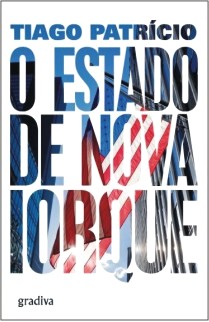
O Estado de Nova Iorque
Author: Tiago Patrício
Publisher: Gradiva
Pages: 137
ISBN: 978-989-616-539-0
Year: 2013
"Everyone has some idea about America, but nobody knows what they'll find," Tiago Patrício reminds us in this book of brief impressions and aphorisms, written during a residency at Ledig House under a literary creation grant. Patrício begins the fragmentary account in an almost documentary tone, describing the departure with a suitcase full of books, the incidents of air travel, communication barriers between passengers, and arrival in the USA, with the most obvious culture shocks, from food to the cost of things.
In economical language, the first part offers what one expects from a travel diary: portraits of typical Americans, astonishment at New York's verticality, many echoes of September 11th, ironic reflections on Wall Street and the financial crisis. "Here, everything is robust and muscled: the trucks, trains, factories, washing and drying machines, laws, words, sentences."
The following parts evolve toward other "states" of writing, less objective. When describing writers' lives in creative retreat, in a bell jar with meals at set times and a pool, there's a fictional tension that settles in, with small fears invented by those who only want to "get scares in safety." Then, once the initial strangeness dissolves, reality itself gives wings to this diffuse book. In a church, a girl in a wheelchair tries to stand: "When she falls helplessly, further ahead, the suspicion arises that someone in the room lacks faith." At night, in places where Melville walked, "one can see a very yellow whale eye on the horizon, which becomes more placid as it rises in the sky."
[Text published in Expresso newspaper's Actual supplement]